|
|
They Said It
Couldn't Be Done.
Yesterday
We Did It.
The Massachusetts House passed the PROTECT Act — the most comprehensive immigrant protection legislation in state history.
|
|
|
Friends,
I remember the exact moment I decided to run for office.
It was during Trump's first term. I watched the Safe Communities Act get filed and then die in committee without a public vote or debate, and when it happened again the next session, I started asking why. The answer I kept getting was: “That's how it works here.”
I decided that wasn't good enough.
That frustration is what drove me to work on a campaign to unseat the House Ways and Means chair who refused to support the bill and killed it in his own committee. It's what led me to co-found Act on Mass, because I believed that if committee votes were public, legislators could no longer quietly kill the bills our communities needed. And it's a big part of why I ran for office in the first place six years ago.
|
|
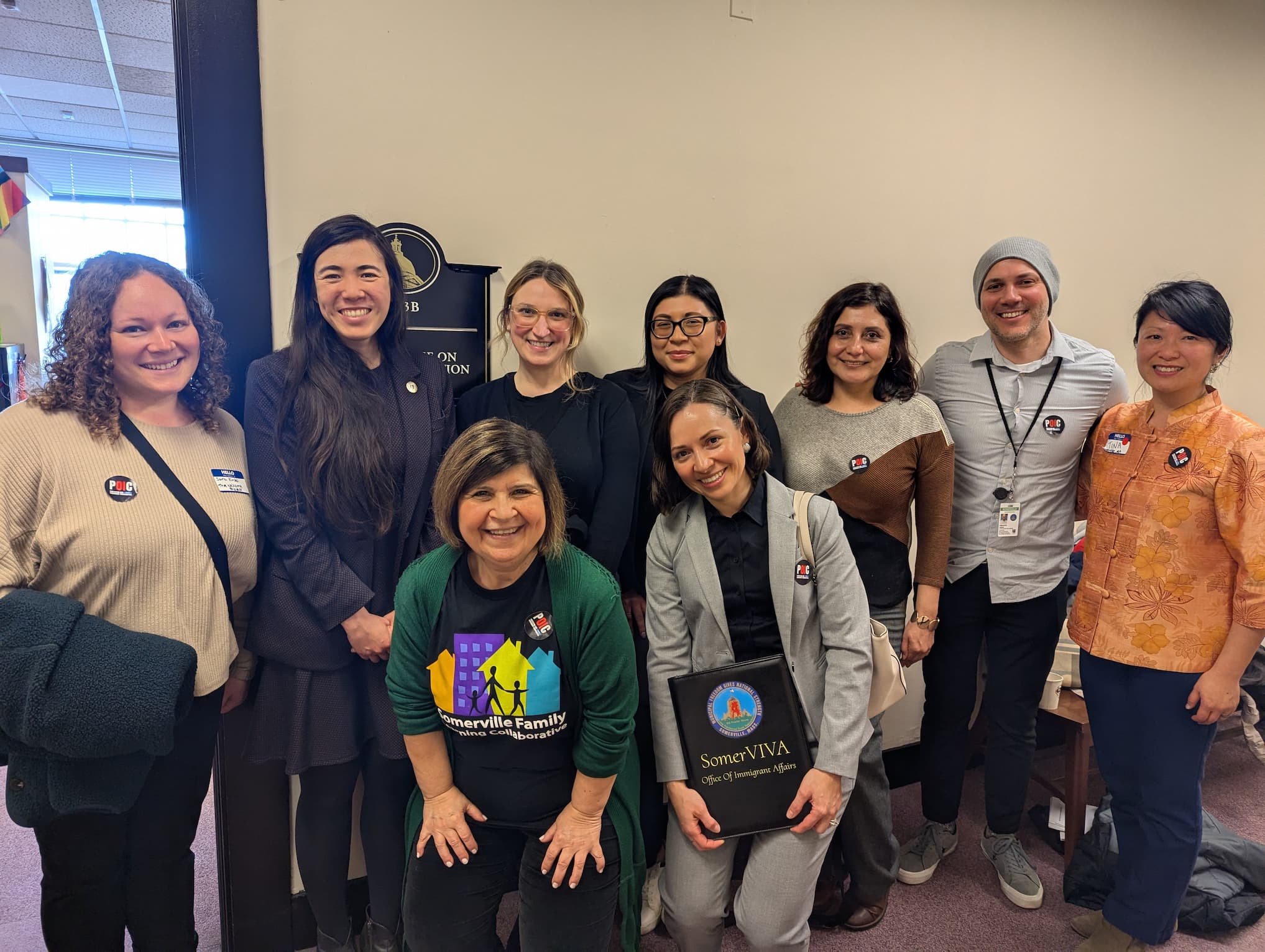
Yesterday, the Massachusetts House passed the PROTECT Act.
|
|
|
I want to thank the members of the Black and Latino Caucus who filed the first draft of this bill and fought for it when many in the building said it couldn't be done. And I want to thank every single person who showed up, called, organized, and refused to take no for an answer. This bill exists because of you.
Let me be direct about something.
In December, the Boston Globe reported that the Massachusetts Legislature had not passed robust, standalone legislation aimed at protecting immigrants. Lawmakers said there was little they could do because the federal government controls immigration policy. The Safe Communities Act hadn't even received a vote in committee yet.
Then we all spoke up. We channeled our outrage from the senseless and visible violence and murders in Minnesota. We protested, we organized, so many of you made so many calls and held meetings with your electeds, and yesterday, the House passed the most comprehensive immigrant protection legislation in Massachusetts history.
It was always possible. What changed wasn't the law. What changed was the political cost of doing nothing.
|
|
|
|
The Problem
What Can ICE Do in Massachusetts Right Now?
|
|
Right now, ICE agents can walk into a courthouse and arrest someone without a warrant or any judicial review, using nothing more than a civil detainer.
Right now, local police can voluntarily share your address, your immigration status, and your release date with federal agents.
Right now, if you are detained, nobody is required to tell you your rights in your own language, notify your lawyer where you are, or let your family know you've been moved.
Right now, if ICE audits your employer's records, your boss doesn't have to tell you about it.
All of this changes with the PROTECT Act.
|
|
|
The Solution
What the PROTECT Act Does
|
|
In Our Courthouses
ICE can no longer make an immigration arrest in a courthouse unless they present a judicial warrant to a judge. Without a warrant, no arrest can be made. Civil arrests inside courtrooms are prohibited except in extraordinary circumstances determined by the judge — and this is not a guideline, it will be law.
For Law Enforcement
State and local police cannot ask about your immigration status unless it is directly tied to a specific criminal investigation and they document the reason. They also cannot use state or local resources for federal immigration arrests, share your personal information with ICE, or tip them off about your release date.
In Detention Facilities
Every person detained must receive written notice of their right to a lawyer, in their own language, at intake. Their attorney gets at least one confidential phone call per day. If they are transferred, their lawyer and a designated family contact must be notified within six hours. Facilities must provide interpreter services and maintain a public phone number so families can find out whether someone is being held.
In the Workplace
If your employer receives an I-9 inspection notice from ICE, they must notify every employee in writing within 48 hours, giving workers time to understand their rights, talk to a lawyer, and prepare. This provision has gotten almost no attention, but it changes the entire dynamic of workplace enforcement.
In Bail Decisions
Judges can now consider the likelihood of imminent deportation when deciding bail. When someone skips a court appearance because they're afraid ICE is waiting, it hurts their case. When a judge can account for the real risk of removal, it helps ensure people can actually show up and participate in their own defense.
For Victims of a Crime
If you are a victim and you come forward, the law now starts from the position that you deserve protection. The district attorney or law enforcement agency handling your case is presumed to certify your U or T visa application if you report the crime and cooperate — charges and convictions are not required. Contact with law enforcement to protect yourself should not mean deportation.
For 287(g) Agreements
No city, town, county, or law enforcement agency can enter into, renew, or expand an agreement that deputizes local officers to perform federal immigration enforcement. Any future agreement must be limited to criminal public safety purposes, approved after public notice and comment, reviewed by the Attorney General, and automatically expire after 12 months with no renewal.
|
|
|
|
|
I want to be honest with you.
This bill is real and it has teeth, and I am deeply proud of what we accomplished yesterday. But a law is only as strong as its implementation, and there are gaps in this bill that I intend to close.
The Department of Correction keeps its existing agreement with ICE, which since 2020 has been used to transfer over 500 people into federal custody. Due process doesn't end at sentencing, and I believe we need far greater transparency about who is being transferred and under what circumstances. I don't accept this as the final word.
There is no funding in this bill for the interpreter services it requires, for the technology to track transfers within six hours, or for training the hundreds of law enforcement officers, court staff, and facility workers who now have new obligations under law. Without dedicated resources, the communities that need these protections most will be the last to receive them, and I will fight for full funding in the budget process.
And if your rights under this law are violated, you cannot sue — only the Attorney General can enforce it. Although AG Campbell is a strong advocate, one office cannot be the sole safeguard for an entire Commonwealth, and we need to explore giving individuals the ability to seek their own remedies.
These are the next fights, and I will be in every one of them.
If you're in a position to support this work, a contribution to our campaign helps us keep organizing, reaching voters across the district, and fighting for the protections that didn't make it into this bill. Every dollar goes directly to building the kind of movement that made yesterday possible.
|
|
|
|
|
|
I got into this work because I believed our legislature could do better, and yesterday we proved it can. Not because the legal landscape changed or because someone in Washington gave us permission, but because people in our communities decided that “there's nothing we can do” was never an acceptable answer.
As always, it is a joy and honor to serve our community. If you have questions about how this bill affects you or someone you love, please don't hesitate to reach out to my office.
|
|
|
|
Follow on Instagram
·
Follow on Bluesky
|
|
Yours in service,
Erika Uyterhoeven
State Representative, 27th Middlesex
Candidate, State Senate, 2nd Middlesex District
|
|
|
Facebook
·
Instagram
·
Bluesky
Paid for by Committee to Elect Erika Uyterhoeven · Somerville, MA
Contributions are not tax-deductible · $1,000 max per individual per calendar year
Unsubscribe
|
Manage Preferences
|
|